Serbia's new leaders plan domestic fixes before changing foreign policy
Experts say the Student List will focus on repairing internal institutions before altering Serbia's relationships with neighbors and global powers.
By Matthew Turner ·
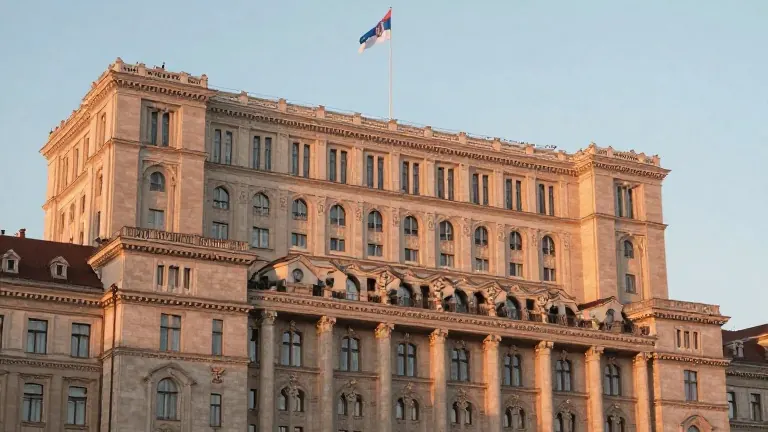
The Student List won a historic victory in Sunday's election, ending fourteen years of rule by Aleksandar Vucic and the Serbian Progressive Party. This result marks a major shift in Serbian politics, yet experts warn that the country's external relationships will change slowly rather than immediately.
Aleksandar Popov, director of the Centre for Regionalism in Novi Sad, stated that regional relations will not be the first priority for the new administration. He explained that the incoming team must first address a system that has captured democratic institutions, including the judiciary, prosecution service, police, and media sector.
"These questions will not be on the agenda immediately," Popov said. He described the current state of affairs as requiring "tidying up at home" before "solving problems with the neighbours." He noted that the outgoing regime had actively undermined ties with Bosnia and Herzegovina, Croatia, Montenegro, and Kosovo through nationalistic rhetoric.
Relations with Croatia remain the most complex. Popov observed that while ties are not frozen, they are marked by frequent sharp exchanges. Vucic recently accused Zagreb of organizing a "colour revolution" during mass protests in Serbia. Popov argued that a quiet convergence exists on Bosnia and Herzegovina, where Belgrade supports Milorad Dodik and Zagreb favors a third entity.
Vuk Vuksanovic, a lecturer in foreign policy at King’s College London, predicted that foreign policy will transform the least among all elements of Serbian public policy. He noted that many international and domestic structures shaping these policies will remain intact. Moscow, he said, viewed Vucic as "the devil they knew," implying that Russian influence will take a hit but not disappear.
Vuksanovic asserted that Serbia will likely maintain its policy of not recognizing the annexation of Crimea and Donbas. However, he questioned the future of ammunition deliveries to Ukraine, as the opposition viewed Vucic's weapons sales to Kyiv as a cynical ploy to buy Western tolerance for his domestic rule. He stated that the new government will not see value in joining EU sanctions or adopting a hawkish stance toward Moscow.
Bosko Jaksic, a foreign policy analyst, added that Serbia's close partnership with Israel will face scrutiny. He said the new government has no reason to abandon cooperation but will re-examine newly concluded contracts, primarily concerning Serbian ammunition exports to Israel and Israeli surveillance equipment exports to Serbia. Jaksic noted that Serbia's future stance will also depend on the outcome of Israel's own elections.
The analysts agree that Serbia will undergo a period of intense internal reform. Popov expressed hope that the new government, led by experts and civic leaders, will work to stabilize the region and revive hopes of joining the European Union. He stated that the previous government sabotaged EU integration and that the EU will not accept a country without good neighborly relations.
Source: Al Jazeera