
UK Weighs Financial Credits for Bidirectional EV Charging
A government consultation proposes letting manufacturers earn ZEV credits for installing grid feedback technology, a move critics argue could allow more petrol car sales.
By Joseph Brooks ·
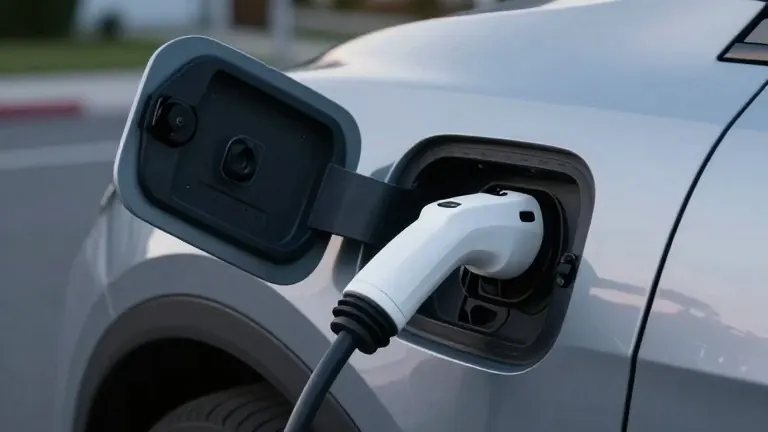
The United Kingdom government is evaluating financial incentives for vehicle manufacturers to install bidirectional charging hardware in electric vehicles. This measure would form part of the final rules for the zero-emission vehicle mandate, a regulatory framework that currently dictates the share of new cars that must be electric.
The proposed system would grant carmakers a specific credit for each car equipped with vehicle to grid technology. This feature allows a battery to send electricity back to the power grid or to the driver's home. Under the current draft, a manufacturer could use this credit to offset the sale of a petrol vehicle without triggering penalty fees for missing emission targets. The government consultation on these rules closed on Friday.
Officials view the technology as a solution for grid stability during periods when wind and solar generation drops. By allowing millions of vehicles to discharge stored energy, the network could reduce reliance on natural gas power plants. The National Energy System Operator estimates that if adoption spreads, these vehicles could provide 1.2 gigawatts of power by 2030. That figure could rise to 41 gigawatts by 2050, which would cover more than a quarter of peak energy demand.
Critics argue the incentive structure creates a market distortion. They note that the hardware costs a few hundred pounds, while the proposed credit value is approximately £4,000 per unit. Ben Nelmes, chief executive of the think tank New AutoMotive, stated that manufacturers should only be rewarded if the technology is actually used. He warned that the current proposal hands manufacturers thousands of pounds per car for kit that many drivers cannot utilize because they lack the necessary expensive chargers.
Vicky Edmonds, chief executive of the Electric Vehicle Association England, described the timing as premature. She noted that only a small fraction of the millions of electric vehicle owners in the UK currently use grid storage features. Edmonds said it is too early to give manufacturers a credit that effectively allows them to sell fewer electric vehicles for a technology that has not been tested at scale in the real world.
The credit system interacts with plans to cut electric vehicle sales targets under the mandate. Environmental groups anticipate that these changes could lead to an additional 147 million tonnes of carbon emissions by 2050. The government aims to spread the technology to lessen the load on the grid, but opponents believe the financial benefit should go to drivers and billpayers rather than carmaker shareholders.
Some drivers already participate in these programs through commercial providers. Companies such as Octopus Energy in the UK, Renault in France, and BMW in Germany offer services where drivers sell electricity back to the grid. Octopus Energy claims drivers can save £620 a year with this service. These existing markets demonstrate the commercial viability of the technology without the need for a new regulatory credit.
Source: The Guardian
More Business · Bad Service · Report a business · Got a Story?