France Expands Nuclear Deterrence Network Across Europe
Ten nations have joined Paris's forward deterrence plan to share intelligence and host Rafale jets, a move aimed at reassuring allies as US commitment wavers.
By Matthew Turner ·
Europe has moved to strengthen its independent defense posture as trust in Washington fluctuates. France is coordinating with ten European partners to expand its nuclear deterrence role on the continent, according to a report from The Wall Street Journal on Monday.
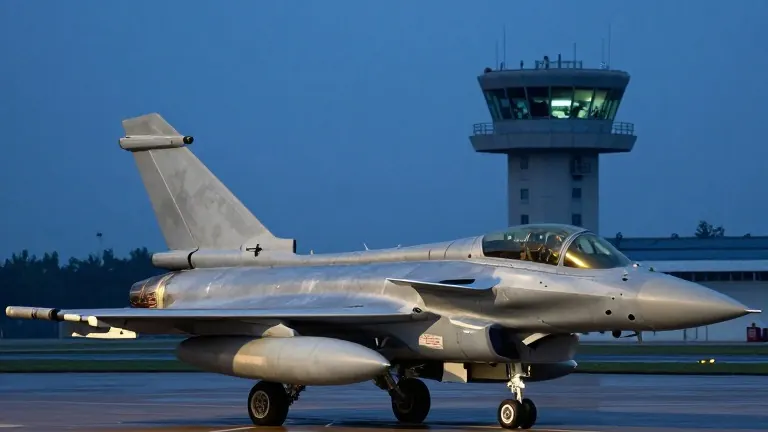
The initiative, designated as forward deterrence, involves constructing new infrastructure for communications, early warning, and intelligence sharing. It also includes the deployment of French Rafale fighter jets capable of carrying nuclear weapons to bases across allied countries.
Since French President Emmanuel Macron announced the plan in March, the United Kingdom, Germany, Poland, the Netherlands, Belgium, Finland, Norway, Sweden, and Denmark have joined the effort. Finland's President Alexander Stubb clarified the scope of his country's involvement. "We don't have any plans to put nuclear weapons on Finnish soil in peacetime. But we do have plans for creating a strategic dilemma for Russia," Stubb stated. He described the process as a ten to fifteen year project.
France has managed the expansion through bilateral negotiations rather than multilateral summits. Senior defense officials told The Wall Street Journal that this approach has forced European governments to maintain constant contact to compare the specific terms Paris offered each partner.
The push coincides with increased European concern regarding American reliability. Doubts have grown over whether Washington would risk a nuclear conflict to defend a European ally, particularly as US President Donald Trump pursues energy deals with Russian President Vladimir Putin and pressures Ukraine.
French officials contend their deterrent is more credible because Paris shares the continent's geography and economic continuity. Chatel, an adviser to Macron, noted at the Warsaw Security Conference that France is part and parcel of the same continent as its neighbors. Macron argued in March that the survival of close partners directly affects French vital interests.
Norwegian Foreign Minister Espen Barth Eide said the plan supplements rather than replaces existing US nuclear guarantees. France will resume producing nuclear devices for the first time in decades and will keep the size of its stockpile confidential. The nuclear force will remain under sole French control, an arrangement designed to secure support across the French political spectrum, including from Marine Le Pen's far-right party, which is currently polling ahead in the presidential race.
Source: The Jerusalem Post
More Politics · World news · Report a business · Got a Story?