Cobb Voters Face Midterm Test Amid $277 Million GOP Spending Surge
National trends show Republican candidates relying on record funding to offset economic concerns and presidential approval gaps.
By Matthew Turner ·
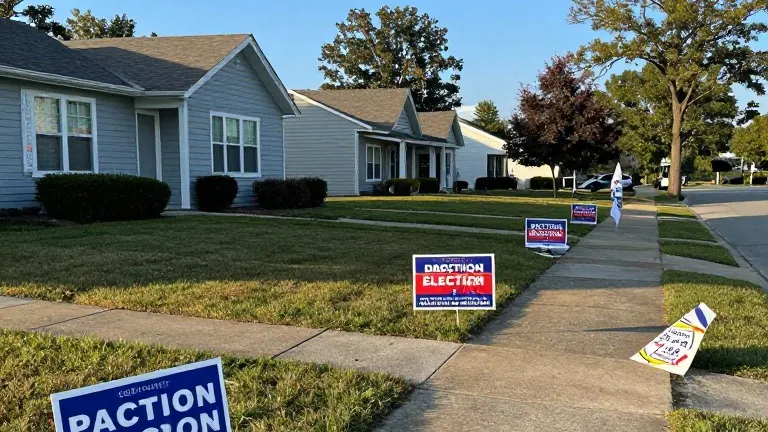
Trump’s political groups spent nearly $277 million to boost Republican candidates since September, marking a financial record for a midterm cycle. This expenditure sets the stage for Tuesday’s elections, where national polling indicates that only about one-third of U.S. adults approve of the president's performance.
The financial investment aims to counteract economic headwinds driven by tariff policies and military engagements. Republicans face a difficult task in defending their congressional majorities as voters weigh the cost of groceries and gas against the party’s message. Former Democratic President Barack Obama stated in Ohio that the current administration’s actions are directly responsible for rising costs, a claim that Democratic advertisements in Michigan have reinforced by linking specific Republican candidates to the president.
Republican Senator John Cornyn of Texas warned that primary choices have complicated the race for his seat. He described the candidate selected by Trump, state Attorney General Ken Paxton, as weak against Democrat James Talarico. Cornyn noted that even in heavily Republican areas, flawed candidates may struggle to secure victory, adding pressure to the party's overall strategy.
The administration’s domestic priorities have also drawn criticism, particularly regarding construction projects in Washington. A new ballroom is being built over the White House, a project Chief Justice John Roberts deemed likely unlawful. Plans to close a Potomac River park to make way for a golf course have further intensified scrutiny, with the president signaling an intention to proceed with the changes later this month.
Historical data shows that midterm elections typically result in seat losses for the president’s party. Democrats gained 40 House seats in 2018 during Trump’s previous term, while Republicans picked up 63 seats in 2010 under President Obama. In 2006, Democrats gained 31 seats under President George W. Bush. These patterns suggest a structural challenge for the current Republican majority, though redistricting has reduced the number of genuinely competitive House districts in recent cycles.
Republican candidates are attempting to balance loyalty to the president with independence. Ashley Hinson, the GOP Senate nominee in Iowa, said she would be an ally to Trump when important for her state but would push back when necessary. She recently visited an ethanol facility in Dyersville alongside Environmental Protection Agency Administrator Lee Zeldin. Hinson expressed nervousness about discussing the administration’s deal with Russia to lower diesel prices, highlighting the delicate position of her campaign.
Democratic leaders are advising caution despite optimistic polling. Maryland Governor Wes Moore stated that anger against the president is a waning emotion and emphasized the need for the party to deliver results. Senator Elissa Slotkin of Michigan described the midterm as a signal and reaction to the party in power. She noted that if Democrats manage to flip the House, their actions starting January 1 will serve as a proof point for swing voters who supported the change.
Source: Atlanta News First · original report published
More Politics · Atlanta news · Report a business · Got a Story?