Cobb County Voters Head to Polls for Senate and Governor Races
As polls open at 7 a.m. in Cobb County, Georgia, voters decide the state's Senate and governor races while ten other states face pivotal Senate contests.
By Matthew Turner ·
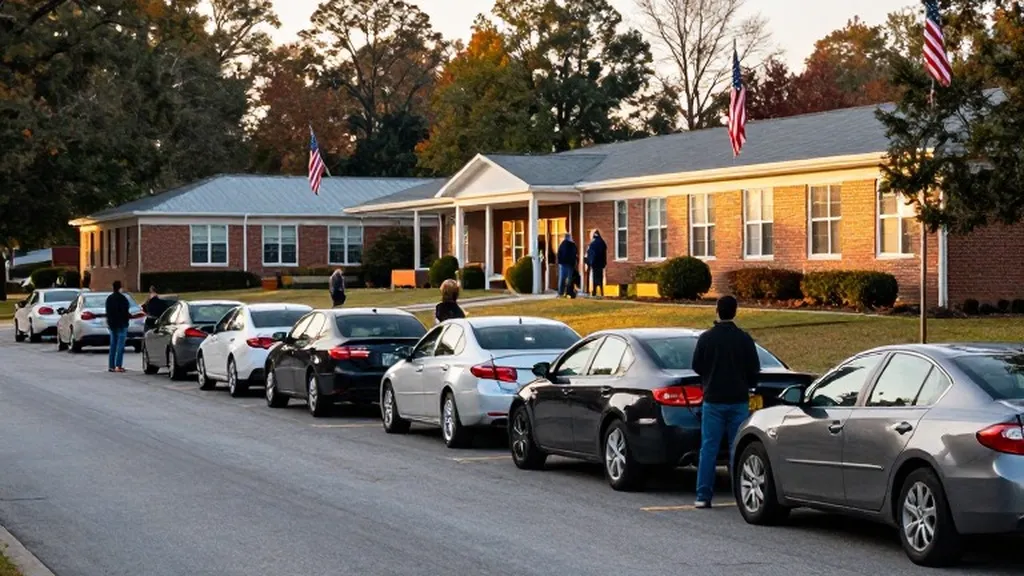
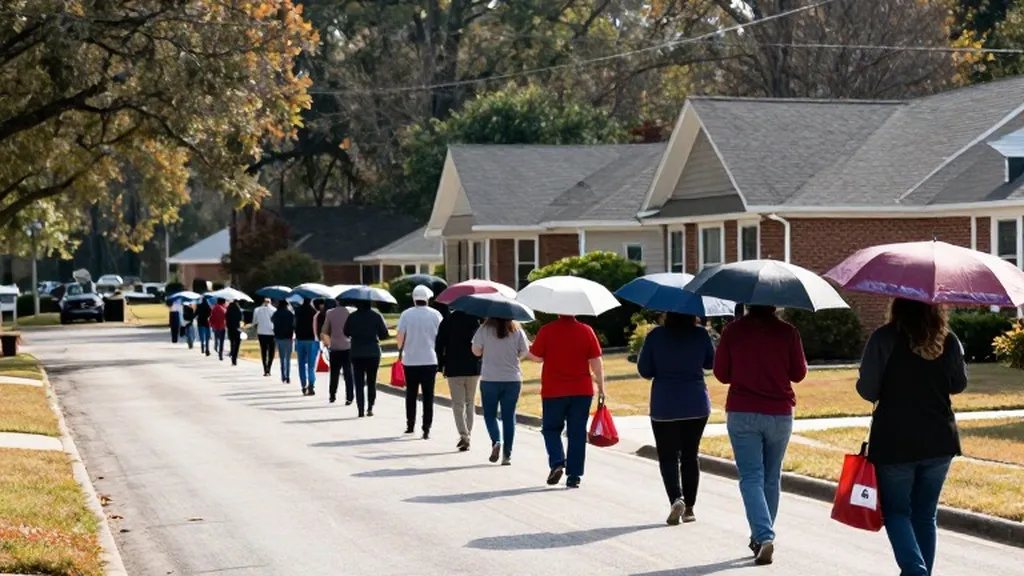
Cobb County voters began arriving at polling places at 7 a.m. on Tuesday, November 3, to cast ballots in the 2026 midterm elections. Polls in Georgia remain open until 7 p.m., according to Ballotpedia. Residents in Atlanta, Sandy Springs, Roswell, Mableton, Marietta, and Brookhaven are deciding who will represent the state in the U.S. Senate and who will serve as governor. The state's ballot also includes every U.S. House seat, state legislative offices, and local ballot measures.
In the U.S. Senate race, Democratic incumbent Jon Ossoff is challenging Republican Representative Mike Collins. Ballotpedia identifies this as a key battleground with the race currently rated lean to likely Democratic. Georgia was a close presidential contest in 2024, with Donald Trump winning by a margin of 2.2 points. This narrow margin has made the state a focal point for national attention as parties seek control of the Senate.
Voters in Cobb County are also choosing the next governor of Georgia, an open seat with no incumbent running for re-election. The race features Republican health care executive Rick Jackson against Democratic former Atlanta Mayor Keisha Lance Bottoms. According to the Associated Press, this contest is one of several competitive governorships that could determine if Democrats hold a majority of governorships for the first time in two decades.
Beyond Georgia, voters in ten other states are deciding high-stakes Senate races that could determine the balance of power in the federal legislature. In North Carolina, former Democratic Governor Roy Cooper faces former Republican National Committee chair Michael Whatley in an open seat following the retirement of Thom Tillis. Ballotpedia notes that North Carolina is one of six states using new congressional maps after mid-decade redistricting, which adds complexity to the legislative landscape.
In Ohio, the special election for the remainder of the term previously held by JD Vance pits Democratic former Senator Sherrod Brown against Republican Senator Jon Husted. The Associated Press describes this as a critical matchup given the state's political leanings. Meanwhile, in Michigan, Republican former Representative Mike Rogers is running against Democrat Abdul El-Sayed for the seat vacated by retiring Senator Gary Peters. A Sunday endorsement from former primary opponent Haley Stevens to Rogers has added a dynamic layer to the Michigan campaign.
Texas voters are deciding the Senate race between Republican Attorney General Ken Paxton and Democrat James Talarico. The Associated Press reported that President Trump backed Paxton over Senator John Cornyn in the primary, a move that has shaped the general election narrative. In Maine, Senator Susan Collins, a Republican, is defending her seat against Democratic former state Senate President Troy Jackson. The Associated Press notes that economic strain and tariffs have made the state competitive, with the race rated a toss-up by all four major prediction services.
New Hampshire residents are voting in an open Senate race where Democratic Representative Chris Pappas faces former Republican Senator John E. Sununu. This contest is for the seat held by retiring Senator Jeanne Shaheen. In Minnesota, four candidates are competing for the seat vacated by retiring Senator Tina Smith, including Democratic Lieutenant Governor Peggy Flanagan and Republican Michele Tafoya, a former sports broadcaster. The Associated Press highlights that Minnesota is one of the states where the outcome could swing the Senate majority.
Kansas, a traditionally reliable Republican state, has become central to the fight for Senate control. Ballotpedia lists the race as toss-up to lean Republican. The Associated Press notes that Kansas is a key target for both parties as they attempt to secure a majority. In Alaska, the race is rated toss-up to lean Democratic, with the Trump administration having filed a lawsuit related to the certification of the Senate result, adding a legal dimension to the vote counting process in that state.
The Associated Press describes the 2026 election as a referendum on President Donald Trump's second term, with voters expressing frustration over high prices and an unpopular war with Iran. Polling from AP-NORC indicates that 35 percent of U.S. adults approve of Trump's job performance, while about seven in ten say the country is heading in the wrong direction. More than 57 million people had already voted as of Monday, surpassing early voting totals from four years ago in many closely watched states.
Republicans are bracing for a potential loss in the House of Representatives while fighting to hold the Senate. The Associated Press reports that one or two seats could tip either chamber, making turnout a decisive factor. RNC Chairman Joe Gruters stated that everything depends on turnout, while DCCC Chair Rep. Suzan DelBene said the American people are angry and want change. The results of these races will determine the direction of Congress for the final two years of the current presidential term, with winners beginning their terms on January 3, 2027.