Cobb County voters weigh Senate race, state amendments in 2026 midterms
Georgia's polls open at 7 a.m. for a day that determines the balance of power in Washington, D.C., while local voters decide on agricultural tax changes and judicial elections.
By Joseph Brooks ·
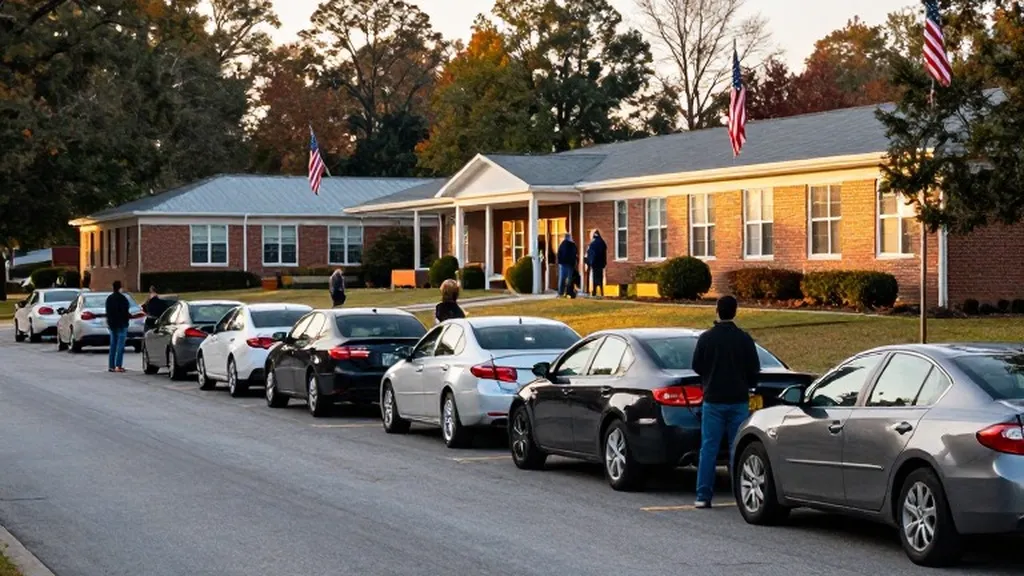
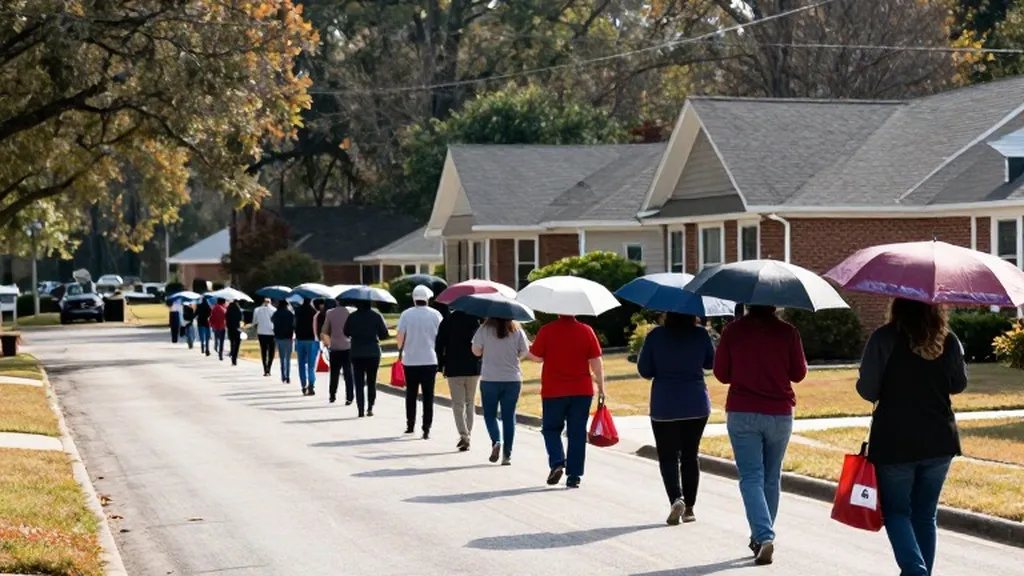
Polls across Cobb County opened at 7 a.m. on Tuesday, November 3, 2026, as voters in Atlanta, Sandy Springs, Roswell, Mableton, Marietta, and Brookhaven began casting ballots for a slate of federal, state, and local offices. The day marks the midterm election, a critical checkpoint halfway through President Donald Trump's second term that will determine which party controls Congress for the remainder of his presidency. According to the Associated Press, the election is being viewed as a referendum on the current administration, with voters grappling with high prices and an unpopular war with Iran. Early voting numbers surpassed those of four years ago, with more than 57 million people having already cast ballots as of Monday.
In Georgia, the stakes are particularly high for the U.S. Senate seat currently held by Democratic incumbent Jon Ossoff. Ossoff is facing Republican Representative Mike Collins in a race that Ballotpedia describes as leaning or likely Democratic. The state voted for Trump by a margin of 2.2 points in the 2024 presidential election, making it one of thirteen battleground states where the outcome of the Senate race is in question. Voters in the Peach State will also choose a new governor, as the seat is open with no incumbent running. The general election features Republican health care executive Rick Jackson against Democratic former Atlanta Mayor Keisha Lance Bottoms, who is positioned to succeed Brian Kemp.
Beyond the major federal races, Georgia voters are deciding on three constitutional amendments that will shape state policy. Amendment 1 proposes to increase the maximum acreage of agricultural and timber property that can be classified as bona fide conservation use property from 2,000 to 4,000 acres. This classification allows land to be taxed at 40% of its value. Amendment 2 seeks to require that probate judges be elected on a nonpartisan basis, a change that would alter how these specific judicial seats are contested. Finally, Amendment 3 would allow the state legislature to create and dedicate revenue to a new fund titled the Georgia Next Generation 9-1-1 Fund, potentially securing resources for emergency communication infrastructure.
Local voters in Cobb County and across Georgia are also selecting candidates for state and local offices, including state senators, state house members, school boards, and municipal positions. Ballotpedia notes that the specific measures and offices vary by county, meaning residents in different parts of the county may see different local items on their ballots. The U.S. House of Representatives is also fully up for election, with all 435 seats at stake. In Georgia, every House seat is on the ballot, contributing to the national fight for control of the lower chamber, where Democrats need a net gain of three districts to achieve a majority.
The national context of the day is defined by a competitive landscape for both chambers of Congress. Republicans currently hold a majority in the House and the Senate, but they face significant challenges in retaining those positions. The Associated Press reports that Republicans are bracing to lose the House while fighting to hold the Senate. In the Senate, Democrats need a net gain of four seats to take control, a difficult hurdle given that Republicans can afford to lose only two seats. The governorship race in Georgia is part of a nationwide contest for 36 governorships, where Democrats hope to hold a majority of these offices for the first time in two decades.
Voters in Cobb County can find their specific polling places at vote.gov or by contacting their state election office. In Georgia, polls remain open until 7 p.m. local time. Anyone in line when the polls close is entitled to cast a ballot. ID rules vary by state, so voters are advised to check specific requirements before heading to the polls. The U.S. Postal Service has added hours, staff, and special lines to ensure that mail-in ballots are counted on time, a measure that has become increasingly important as mail voting continues to grow in prominence.
The financial aspect of this election is also record-breaking. The 2026 elections are likely to be the most expensive in history, with Republican committees outraising and outspending their Democratic counterparts at the committee level. This spending was aided by Trump-affiliated groups and Elon Musk. However, at the candidate level, Democrats outraised their opponents. An analysis by the Associated Press of AdImpact data shows that 88.1% of Republican general election TV ad spending went to states and districts that Trump won in 2024, including more than $850 million in districts where he won by 10 points or more.
President Trump has been active in campaigning, holding dozens of rallies that ended Sunday in Salina, Kansas, where he urged voters to pretend he was on the ballot. His schedule included stops in Mississippi, South Carolina, and Texas. While many Republican candidates have kept their distance from the president, he has continued to make claims about voting fraud, including that noncitizens vote in large numbers. His administration has sued in Alaska and California, and Democrats fear interference and intimidation as the Justice Department threatens to prosecute local election officials.
A federal judge temporarily barred the administration on Monday from carrying out a plan it says would prevent noncitizen voting, a move that critics say risks disenfranchising eligible voters. Another judge ordered the administration to stop demanding that California election officials segregate ballots cast by people on lists of suspected noncitizens. These legal battles highlight the tension between federal authority and state control over election administration. Wall Street is watching the results closely, as Reuters notes that the outcome could add to investor concerns about AI spending and debt ceiling negotiations.