Vatican Recognizes 1597 Georgia Martyrs Ahead of Savannah Ceremony
Five Spanish Franciscan friars will be declared blessed this Saturday, concluding a centuries-long review process that centers on the question of whether religious persecution motivated their deaths.
By Matthew Turner ·
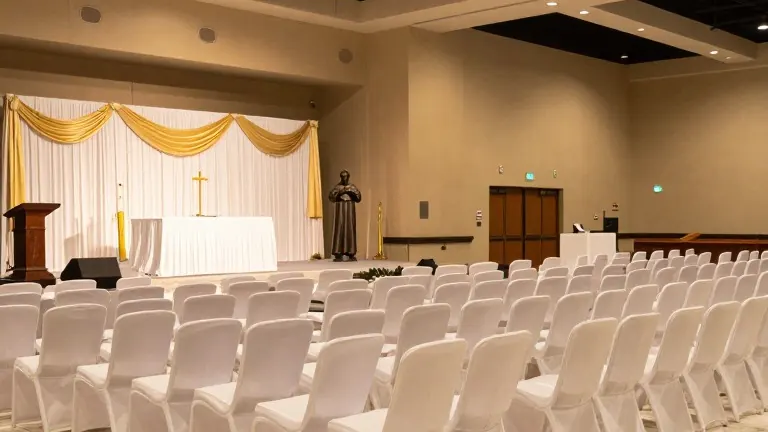
The Catholic Diocese of Savannah will elevate five Spanish Franciscan friars to the rank of blessed on Saturday, a decision that resolves a historical debate spanning nearly four and a half centuries. The ceremony, scheduled to draw approximately 10,000 attendees to the Savannah convention center, marks the sixth beatification held in the United States and follows the recent recognition of Archbishop Fulton Sheen in St. Louis.
Bishop Stephen Parkes, who leads the Savannah diocese, stated that the friars' sacrifice offers a distinct contrast to modern American life. "Likely we will not be called to be martyrs, especially living in a country where we enjoy life, liberty and the pursuit of happiness," Parkes said. He noted that the event prompts individuals to consider what causes they would defend with their lives.
The friars died on September 14, 1597, during a conflict with the Guale, an Indigenous chiefdom in the region that was then part of Spanish Florida. The violence began when Friar Pedro de Corpa objected to Juanillo, the nephew of a Guale chieftain, for planning to take a second wife. Juanillo led warriors to de Corpa's hut, where they killed the friar with stone clubs. In the following days, Guale warriors attacked nearby missions and killed four additional friars: Blas Rodriguez, Miguel de Anon, Antonio de Badajoz, and Francisco de Verascola.
The path to beatification required the Vatican to prove that the missionaries died as martyrs defending Christian values, a standard that differs from sainthood, which requires a verified miracle. The process began in the 1950s when U.S. bishops proposed the candidates, but the Diocese of Savannah did not formally join the effort until 1984. A Franciscan historian delivered a nearly 500-page report to Rome in 2007, and the case sat in review for nearly two decades. Pope Francis signed the decree recognizing the friars as martyrs in January 2025, shortly before his death.
Historians and local leaders offer context that complicates the narrative of simple religious persecution. John Worth, a historical archaeology professor at the University of West Florida, explained that the friars acted as intermediaries, helping the Guale navigate the Spanish system while expecting conversion. He noted that the friars brought iron tools for farming but also challenged ancestral traditions. Some historians argue the friars were caught in a political power struggle between Guale rivals rather than being the primary targets of a religious purge.
RaeLynn Butler, secretary of culture and humanities for the Muscogee (Creek) Nation, emphasized that the Guale history extends beyond the 1597 killings. She described the period as a complex time when Indigenous peoples struggled to preserve their sovereignty. "While the killing of the friars was tragic, the history of the Guale people extends far beyond those events," Butler said. Modern descendants of the Guale are integrated into the Muscogee (Creek) Nation after the chiefdom was decimated by raids and enslavement by English settlers in the 1700s.
The diocese has spent the last decade increasing public awareness of the friars through a documentary film, a detailed website, and a bronze monument. Rev. Pablo Migone, who served as the diocese's chief promotor for the beatification, said a strong historical case was necessary to satisfy the Vatican's requirements. The ceremony will include bishops from Spain, Rome, and Africa, highlighting the international nature of the event.
Source: WTOP News