Striped Bass Population Decline Puts $8 Billion Industry at Risk
Anglers in Montauk report a sharp drop in fish numbers, with some veterans stating they have not caught a single striped bass this year.
By Joseph Brooks ·
Striped bass populations on the U.S. East Coast are declining, threatening an industry worth $8 billion and a fishing tradition that has persisted for generations. Scientists attribute the drop in numbers to a combination of human-caused factors, environmental shifts, and ecological changes. While some years see more than 17 million fishing trips dedicated to the species, the future of the stock is now in jeopardy for many anglers.
In Montauk, New York, the decline is visible to local guides and recreational fishermen. Bill Wetzel, a fishing guide with more than 25 years of experience in the area, spends his nights in a modified 4x4 pickup truck scanning the Atlantic for signs of feeding fish. He logs details such as current seams, sandbar cuts, and bird activity. Despite his meticulous tracking of tides and moon phases, he faces uncertainty about whether fish remain to be caught.
Wetzel noted that he has not witnessed a "blitz," a chaotic feeding frenzy typical of Montauk shores, in four years. "There's no small fish left. They're gone," Wetzel said. He observes that the remaining population consists mostly of larger fish because the species is not replenishing itself at previous rates. Wetzel, who grew up fishing for the species, aims to conserve the population so future generations can enjoy the sport.
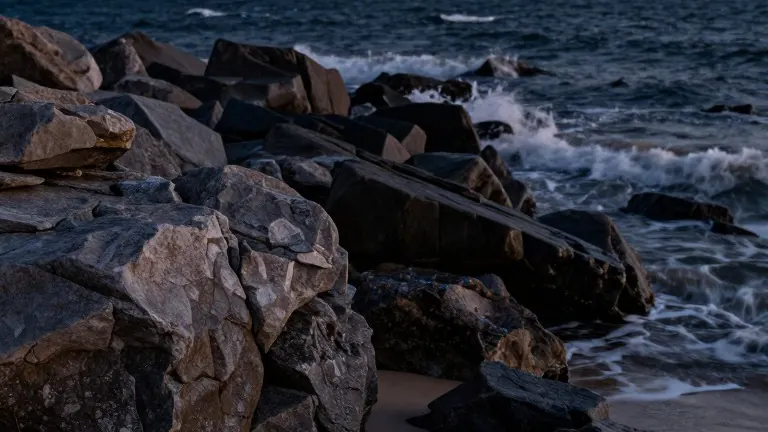
The lack of fish affects more than just the guides. Jason Markowitz, an IT professional and former president of the Montauk Surfcasters Association, swims to offshore rocks to fish. He described the current situation as a case of the "last of the buffalo." Although the swim is chilly and dangerous due to strong waves and predators, Markowitz said it is only worth the effort if the fish are present. Increasingly, he finds they are not.
John Skinner, a 65-year-old author and YouTube content creator, has fished Long Island for 55 years. He described the current state of the industry with blunt simplicity: "It sucks." Skinner runs a popular channel on the subject and has authored a book on striped bass fishing. He frequently visits prime spots on Long Island's North Fork but sometimes leaves without a catch. He observes a lack of small baitfish, such as menhaden, and other large predatory fish.
John Mahan has fished Montauk since 1987. For Mahan, this is the first year in four decades that he has not caught a striped bass. He recalled the later 1980s and 1990s as a spectacular time for the sport. Mahan, who fishes from the rocks in a black hoodie and waders, suggested that the only way to save the population might be to leave the fish alone entirely for a period. He acknowledged that this approach would be difficult for those with a deep personal connection to the sport.
Montauk, located at the tip of Long Island, has historically been renowned for its striped bass fishing. The area features sand beaches, boulder-strewn points, and swift currents that draw bait into coves. Fishermen like Mahan note that the lighthouse and beautiful conditions often suggest the presence of fish, even when the catch is low. The town's unofficial motto, "a small drinking village with a big fishing problem," is no longer accurate, according to Wetzel.
The community has undergone a slow transformation over the decades, accelerating in the 2000s. It has become harder to distinguish from the nearby wealthy enclaves of the Hamptons. Despite these changes, fishermen who have traveled to the area for generations say it retains a unique identity. Wetzel remains attached to the location, stating that the fishing is in him and pointing to the ocean as the reason for his continued presence.
The decline in striped bass numbers has prompted discussions on conservation and regulation. The species can grow to more than 50 pounds. The current situation forces anglers to confront a changing environment that affects both their livelihoods and their cultural heritage. The fishing community continues to monitor the waters, waiting for signs that the population may stabilize or recover.
Source: WDIV ClickOnDetroit