Paris Marches: Youth Protests Return to France's Periphery
320,000 demonstrators took to the streets in a third weekend of unrest, with police enforcing strict boundaries and curfews.
By Isabella Castillo ·
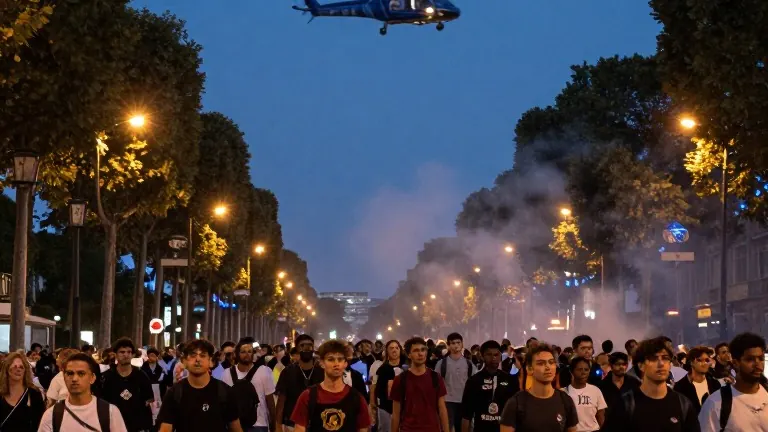
The streets of Paris hummed with techno music and the smell of smoke on Saturday evening. For the third consecutive weekend, young people across France demanded changes to the education system and relief from high living costs. The government estimated that 320,000 people participated in the nationwide demonstrations, a number lower than the 500,000 seen on Oct. 17 but still a large turnout.
The mood in the capital was festive for much of the day. Marchers streamed along the Boulevards des Maréchaux, the ring of avenues that skims the edge of the city. A painter worked on a mural along the route, drawing cheers from the crowd. Some participants dressed in Halloween costumes, and a police helicopter hovered overhead as the sun set. The energy seemed joyful until the march reached its endpoint near Porte de Charenton.
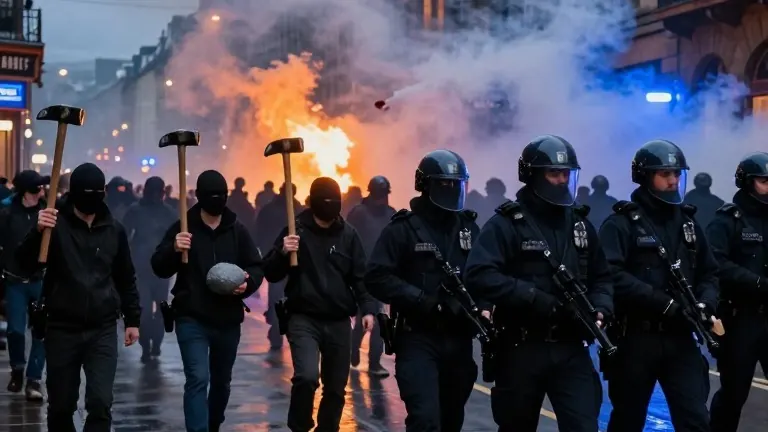
At that location, the atmosphere shifted quickly. Protesters threw glass bottles and fireworks at police lines. Officers responded with stun grenades and tear gas. The blasts echoed through the streets, filling the air with smoke as dusk fell. Many peaceful marchers turned back, coughing and wiping tears from their eyes. Some scattered into the nearby Bois de Vincennes, one of the largest parks in Paris.
Security forces were heavily deployed to prevent a repeat of the riots from Oct. 17. Approximately 70,000 police and gendarmes were stationed across France. In Paris, authorities rerouted the main march to the city's edge to keep crowds away from government buildings and tourist sites. This move followed a last-minute court battle. Interior Minister Laurent Nuñez warned of a very high risk of disorder, particularly after dark on Halloween.
Arrests remained a fraction of last week's total. Authorities reported about 300 arrests nationwide by Saturday, down from 800 at the same point during the Oct. 24 protests. The Interior Ministry stated that 70,000 people are estimated to have joined the main protest in Paris. The crowd included high school students, climate activists, and workers from major labor unions such as the CGT.
The grievances driving the movement are varied. Corentin Cabreux, a 21-year-old student, described living in a state-run residence with damp stains along the walls, peeling sections, and infestations of cockroaches and rats. His experience reflects the complaints of many young people regarding neglected infrastructure. The movement began last month as high school students protested teacher shortages and an admissions system they viewed as unfair to disadvantaged students.
President Emmanuel Macron said the marches would stay out of city centers to protect shops. Police enforced curfews to maintain order. They barred people from entering Place de la Republique and Les Halles from 11 p.m. to 6 a.m. Saturday and Sunday. Unaccompanied minors faced a separate 9 p.m. curfew around the Champs-Elysees. A Paris court suspended an earlier curfew on minors on Wednesday, calling it a serious and illegal infringement of freedom of movement.
The unrest extended beyond France. In Germany, a youth initiative called Gen Z regelt rallied in more than 30 cities. Organizers said tens of thousands participated, though official figures were not immediately available. In Berlin, students gathered at the Brandenburg Gate. Lara Breitenbach, a high school student, said the group calls for more money in social services, education, and climate protection. She argued that young people will live with the consequences of these decisions the longest.
Police ended a protest march early in Cologne after protesters used pyrotechnics and threw stones. In Hamburg, demonstrators shot pyrotechnics toward police and burned barricades. Police used water cannons and tear gas to disperse the crowds. In Frankfurt, protesters pummeled police with stones, injuring several officers, one of them severely. In Lisbon, thousands protested the housing crisis, holding placards that read Houses or Fire. In The Hague, police maintained a strong presence in the downtown shopping area, though no major disturbances occurred by midafternoon.
Source: WUSF Public Media