49 seats short: Israel's election leaves no clear path to power
Neither Prime Minister Netanyahu nor challenger Eisenkot can form a majority, setting the stage for a 28-day countdown to coalition talks.
By Matthew Turner ·
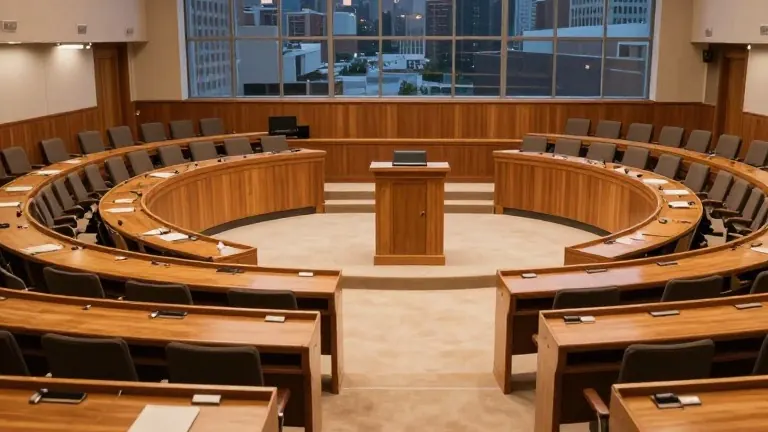
Israel’s recent election has left the country without a clear government. Neither Prime Minister Benjamin Netanyahu nor his main challenger, Gadi Eisenkot, secured the 61 seats required to rule the 120-seat Knesset.
The final results show that opposition parties won more seats than Netanyahu’s right-wing bloc. However, Eisenkot, a center-right former military chief of staff, lacks a majority without support from predominantly Arab parties. His allies ruled out this option during the campaign.
Netanyahu’s Likud party received the most votes, but his coalition of right-wing, far-right, and ultra-Orthodox parties falls short of the necessary threshold. The next few days will determine who is given the first chance to form a government.
Israel’s president will consult with all elected party leaders. Each party will recommend a candidate they believe can assemble a coalition. The president is not bound to choose the leader of the largest party. Instead, the selection goes to the candidate deemed most likely to succeed.
The chosen candidate has 28 days to secure 61 lawmakers. The president may extend this period by up to 14 days. If the effort fails, another candidate receives the opportunity. This process could take weeks or months.
Eisenkot appears more likely to receive recommendations from newly elected lawmakers than Netanyahu. However, his bloc needs roughly 13 defectors from the opposing camp if he continues to exclude Arab parties. Netanyahu would need about eight defectors to reach a majority without them.
One potential outcome is a unity government combining Netanyahu and Eisenkot. President Trump reportedly favors this arrangement, though the news outlet has not independently confirmed the reports. Such a government might include moderate parties from the political center.
A second possibility is an Eisenkot government supported by Arab parties. Together, these groups command more than 67 seats. Yet Eisenkot has promised not to serve in a government dependent on their support, citing disagreements over Hamas and the war in Gaza.
A third option is a return to the polls. Israel’s president has urged leaders to avoid this, but it remains possible if no coalition forms. Netanyahu may prefer a new election, hoping that Arab turnout will decline and liberal voters from overseas will be less likely to return.
The opposition may move to undermine Netanyahu during the stalemate. They plan to replace the speaker of the Knesset and pass legislation establishing a state commission of inquiry into the failures that preceded the Oct. 7, 2023 attack. They also aim to reverse laws that critics say weakened democratic institutions.
Netanyahu warned in his election night speech that Israel must complete its mission against Iran. Eisenkot told Netanyahu not to use Israel’s security for political needs. Analysts note that a renewed war could pressure Eisenkot to join a unity government, a dynamic that occurred after the Oct. 7 attack.
Source: Delaware Public Media