
UGA Researchers Track Heat's Effect on Alligator Egg Sex Ratios
A study of 146 eggs incubated at fluctuating temperatures points to a lower threshold for female-producing conditions than earlier estimates.
By Isabella Castillo ·
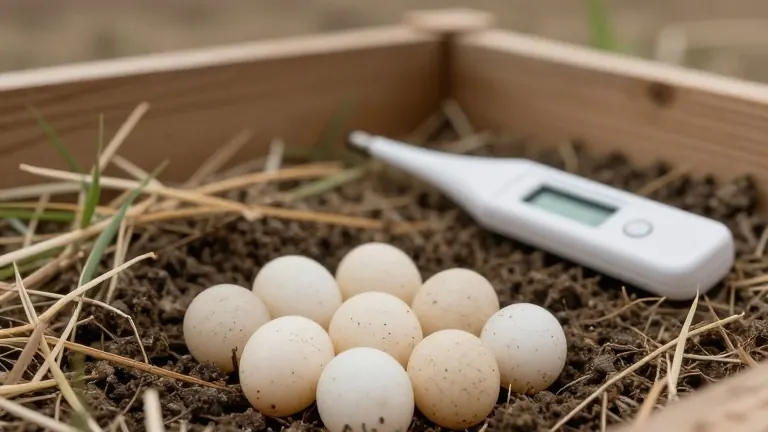
Researchers at the University of Georgia have examined how temperature shifts affect the sex of developing alligators.
A team at UGA incubated 146 alligator eggs across five temperature settings ranging from 86 to 93 degrees Fahrenheit. Unlike many prior studies that hold incubation temperatures constant, this work let temperatures fluctuate within those ranges, mirroring conditions recorded when monitoring nests.
Alligators determine sex based on incubation heat. Eggs kept at moderate temperatures tend to produce males, while more extreme temperatures tend to produce females. The study found that at higher temperatures, results diverged from constant-temperature models by as much as 1.36 degrees Celsius, or about 2.49 degrees Fahrenheit. Earlier research had projected that female production would begin at roughly 97 degrees Fahrenheit, but this study placed that point at 93 degrees Fahrenheit.
Benjamin Parrott, an associate professor in the Savannah River Ecology Laboratory and Odum School of Ecology at UGA and the study's senior author, said small temperature differences carry weight for population balance. "For population health and stability, I think it means that those small differences are really important," Parrott said. "Whenever a population is out of balance, it can impact population growth. Whenever you start to lose females, then the population can really get in trouble."
Parrott noted that nest monitoring shows natural temperature swings, and that such swings can push outcomes toward mostly males or mostly females. "That's really relevant for how the environment is going to be changing in the near future. If temperatures are biasing sex ratios, that's a big issue," he said. He added that the method can help predict sex ratios more accurately, but that work remains on sea turtles, alligators, crocodiles and freshwater turtles. "How are those populations going to respond to different environmental conditions? We still have a long way to go."
image_promptA close-up photorealistic news photo of a clutch of pale, leathery alligator eggs nestled in dark soil and dry grass inside a wooden field research tray, a digital thermometer probe resting nearby, soft overcast daylight, shallow depth of field, no people, no text, no logos.
Source: Atlanta News First · original report published