Film Follows Mann Family Across a Germany Split in Two
Pawel Pawlikowski's 'Fatherland' tracks Thomas Mann, his daughter Ericka and son Klaus through 1949 as borders, politics and family obligations collide.
By Isabella Castillo ·
Thomas Mann, the celebrated German novelist, left the United States in 1949 to accept a Goethe Prize in Weimar after 13 years of exile. His son Klaus did not want to go home. The question pressing on Klaus, played by August Diehl, was which side of a divided country he belonged to: Stalin or Mickey Mouse.
Pawel Pawlikowski places the opening in the summer of 1949. Klaus sits on a floor strewn with drugs, his lover asleep nearby, while his sister Ericka, played by Sandra Hüller, urges him by phone to return for their father's award ceremony. Klaus refuses. Germany had been split between American and Soviet control, and Klaus left because he hated the Nazis. He is still German, and everyone wants to know which side he has chosen.
Hanns Zischler plays Thomas Mann. He returns to West Germany and is received warmly, then announces he will cross into the East to visit Weimar and take the prize. Journalists warn him the United States may not readmit him if he enters East Germany. He goes anyway. He believes art crosses borders. He completes the journey despite bad news about Klaus.
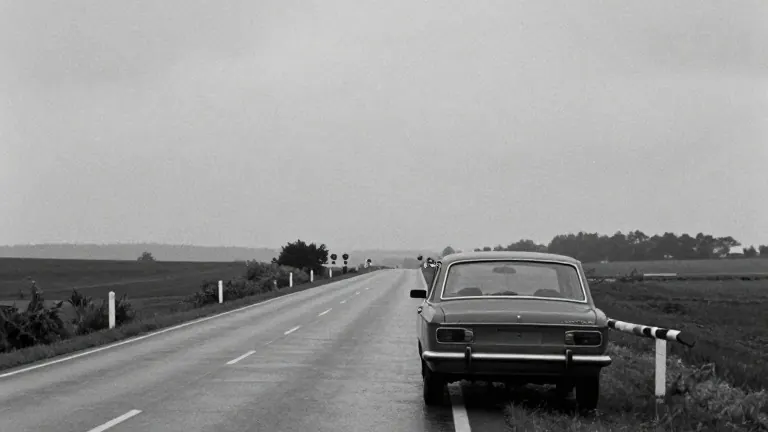
The film is Pawlikowski's final entry in a trilogy of historical films that includes 'Ida' and 'Cold War.' The camera holds long still frames in black and white, catching light through a window or a look in an actor's eye. Emotion breaks through rarely, and then hard.
The story follows Thomas and Ericka as they travel through a country cut in half. After Ericka learns of Klaus's fate, young men walk past her window in West Germany singing a drinking song. She calls them fascists and murderers. In East Germany, the music is choral and state-controlled.
Thomas tells Richard Wagner's grandsons that their father's theater should be burned to the ground. He insists he and Ericka keep moving after the news about Klaus, which wounds his daughter. Zischler plays the father civil and stubborn; Hüller answers with a stillness that simmers.
In one scene, father and daughter recall Klaus on Bach. He said Bach was the only artist who made life feel worth living. That feeling has no politics attached to it.
The three Mann family members are German. The war and its ideologies scattered them across the globe. In the final moments of the film, Ericka and Thomas hold each other and break down. They find what they were looking for in each other.
The Goethe Prize ceremony in Weimar was the stated reason for Thomas Mann's return from the United States.
Source: Rough Draft Atlanta · original report published
More Culture · Atlanta news · Report a business · Got a Story?