Chicago Museum Rebuilds Mary Cassatt's Lost 1893 Mural
Curators at the Art Institute of Chicago have reconstructed the 60-foot piece that vanished from storage in 1912.
By Matthew Turner ·
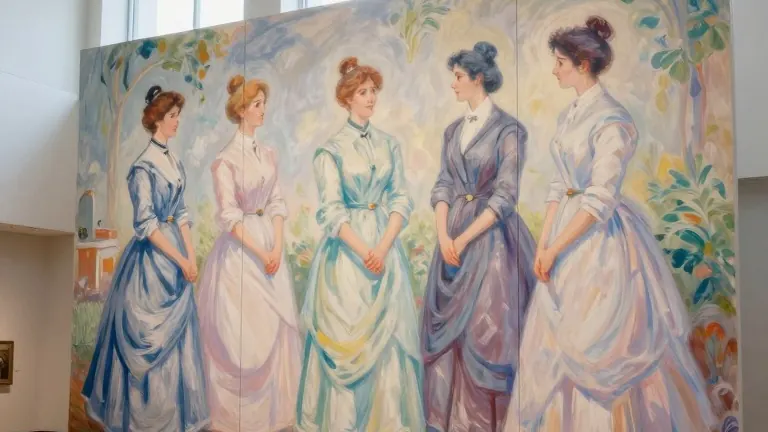
Visitors to the Art Institute of Chicago will see a 60-foot reconstruction of a painting that has been missing for more than a century. The exhibit features a recreation of Mary Cassatt's triptych, Modern Woman, which was created for the 1893 World's Fair. The original work disappeared after the fair ended, leaving only archives and speculation behind.
The mural measured 60 feet in length and 14 feet in height. It consisted of three panels depicting women in various settings. One scene showed well-dressed women chasing a figure representing fame. Another showed women playing music, while the central panel depicted tending to an orchard. The middle scene symbolized women gathering knowledge and science.
Cassatt, an American painter based in Paris, received the commission for the Woman's Building at the fair. Bertha Palmer, a Chicago philanthropist, spearheaded the construction of the building. Art historian Wanda Corn, a professor emeritus at Stanford University, described the structure as a major attraction. The building contained exhibitions on women's patents, innovations, books, and other contributions to American culture.
Cassatt's work was displayed in the main hall of the Woman's Building. It was mirrored by a commissioned mural from artist Mary MacMonnies titled Primitive Woman. Corn noted that these large-scale works represented a rare opportunity for women artists during that era. The murals illustrated the possibility for women to become educated, artists, and public figures.
After the fair, the Woman's Building was dismantled like most other structures on the site. Cassatt's mural was moved into storage. Curator Annelise Madsen stated that the last known location for the piece was the Palmer family mansion on Lake Shore Drive. The residence was once the largest private home in the city before its demolition in 1950.
The Art Institute's archives contain a letter from the museum's director written around 1912. The director inquired about unrolling the mural to determine if it could be installed temporarily at the museum. Madsen explained that the paper trail ends with that question. The mural was never brought out for display.
Speculation suggests the artwork was damaged by water or burned in a fire. Corn believes the piece is likely gone. She noted that many researchers have searched for the mural and concluded it is lost. She does not expect the original to surface.
The exhibition aims to bring the story of the missing mural back to life for visitors. Madsen described the work as an important part of Chicago history. The show highlights how the 1893 commission helped solidify Cassatt's reputation in the United States. It also set a precedent for other women artists to take on large commissions.
Source: Chicago Sun-Times