Residents shape new art plans for Stone Mountain Trail
Georgia State students are using community input to design crosswalks and markings along a five-mile stretch in DeKalb County.
By Matthew Turner ·
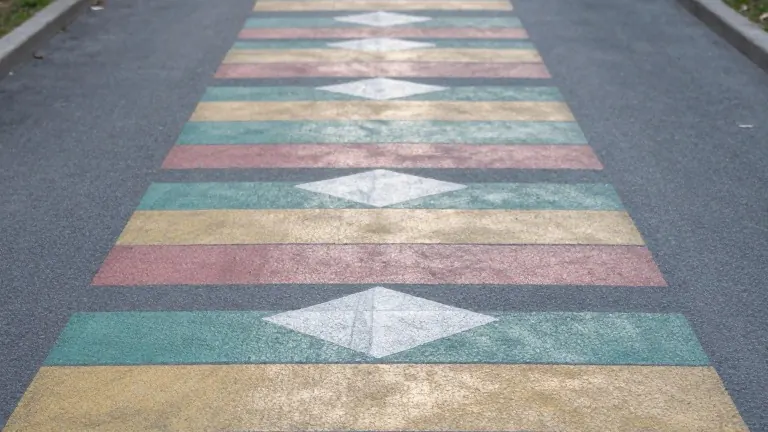
Georgia State University students are co-designing crosswalks and trail markings along a five-mile stretch of the Stone Mountain Trail, with input from residents who use the path daily. The effort, part of the university’s Connecting Communities Stone Mountain Trail Project, covers the route from the Avondale Estates MARTA station to Clarkston.
The project began when DeKalb County Commissioner Ted Terry approached Fernando Rochaix, an associate professor of art history and the Connecting Communities lead, with the idea of bringing public art to the trail. Terry, a former Clarkston mayor, steered the initial proposal toward pavement art rather than a broader artistic corridor. The work builds on a partnership that started several years ago between the city of Clarkston and Georgia State’s Perimeter College Department of Fine Arts.
In April 2023, Perimeter College art students painted a crosswalk mural at Market and Vaughan streets in downtown Clarkston. That project, funded by a Georgia Municipal Association placemaking grant, was part of Georgia Cities Week celebrations and was followed by two additional murals. The success of that earlier work helped establish the foundation for the current five-mile initiative.
Funded by DeKalb County, the current project calls for crosswalks and trail markings at 26 locations, including 15 major intersections. Connecting Communities projects that the new crosswalks could reduce vehicle speeds by up to 20% and increase trail use by 30% within the first year. The goals also include generating new business for the area.
A team of six undergraduates is leading the design work. Each student earned an associate degree at Perimeter College before transferring to Georgia State’s Atlanta campus to study computer science or art and design. The students are paid to run participatory design workshops with residents, business owners, faith leaders, and youth. They are also building artificial intelligence models to help visualize design concepts.
The team uses open-source AI models on its own equipment to turn resident input into quick visual mock-ups. Rochaix said the team is aiming to use AI responsibly to protect privacy and reduce energy use. Residents have participated through listening sessions, youth workshops, and digital surveys available in more than 10 languages. More than 60 people have completed the design survey so far, and the team held three open house design sessions in addition to presenting the project at Compassion Con in October.
The design phase is scheduled to wrap up in December. The team will deliver a report with the proposed designs to DeKalb County and then select a vendor to handle the painting. Rochaix said he does not expect all sites to be ready for another year, though some painting may begin sooner. Residents can still submit input via the Connecting Communities website, where the survey takes about five to seven minutes to complete.
Source: Rough Draft Atlanta · original report published