Fewer than 5% of House races are competitive, limiting voter choice in midterms
Political analysts say uncompetitive districts allow a small number of swing seats to dictate chamber control while reducing accountability for most representatives.
By Isabella Castillo ·
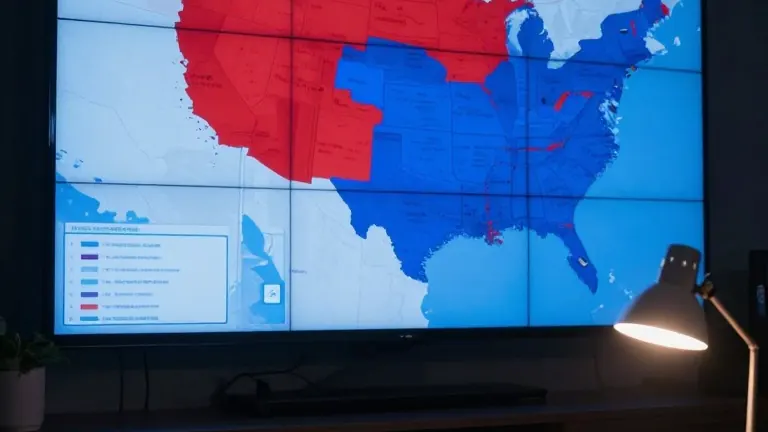
Fewer than 5% of U.S. House races are viewed as truly competitive heading into the November midterm elections, according to the nonpartisan Cook Political Report with Amy Walter. This analysis, dated Oct. 22, indicates that the majority of the 435 districts are already leaning toward one party or the other, leaving relatively few voters with the power to determine which party controls the chamber for the next two years.
As of Oct. 22, the Cook Political Report identified only 21 toss-up seats where either candidate has a viable chance of winning. Another 12 districts lean toward a Democrat, and 13 lean slightly toward a Republican. The remaining 89% of races are projected as likely or solid for one political party. This level of uncompetitiveness is among the lowest recorded in the last three decades, with only 11% of seats rated as at least somewhat competitive this year.
Zachary Peskowitz, a professor of political science at Emory University in Georgia, noted that this lack of general election competition shifts the focus to primary elections. “For a lot of candidates it’s that primary which is particularly important,” Peskowitz said. He explained that this dynamic creates incentives for lawmakers to prioritize activating partisan supporters over reaching across the aisle, often leading to more extreme ideological positions and a confrontational style of lawmaking.
Sean M. Theriault, a professor of congressional studies at the University of Texas at Austin, said the small number of swing districts contributes to narrow majorities in the House. This structure allows a few lawmakers to hold the rest of the majority party hostage until their demands are met. “What we saw with the Republicans, it’s typically the people on the far right who are the ones who are holding their party hostage,” Theriault said. He added that in previous narrow Democratic majorities under Speaker Nancy Pelosi, it was often more moderate members who wielded this influence.
The limited number of competitive races also makes it harder for voters to hold representatives accountable during the general election. Many states require voters to register as a Democrat or a Republican to cast a ballot in the primary, meaning general elections are the only time all voters can participate. “In terms of holding your legislators accountable, especially in the general election, it makes it far more difficult,” Theriault said.
Jonathan Hanson, a lecturer in public policy at the University of Michigan, said uncompetitive seats can suppress voter turnout because voters may feel their vote does not matter. “It’s pretty clear that voters turn out at higher rates when there’s a close election,” Hanson said. He argued that when lawmakers are not facing genuine competition, they tend to stick with their party line, making compromise difficult and rendering the chamber less responsive to the political center.
Kyle Kondik, managing editor at Sabato’s Crystal Ball at the University of Virginia, expects the nonpartisan organization to move several toss-up races to favor one of the parties before Election Day. Currently, the House is composed of 218 Republicans, 214 Democrats, one independent, and two vacancies. Kondik noted that Democrats have prospects similar to the 2018 midterms, when Republicans lost the House majority. He attributed lower midterm turnout primarily to the absence of a presidential ballot, though he acknowledged that intense competition in specific districts can boost participation.
Source: Cobb County Courier · original report published
More Politics · Atlanta news · Report a business · Got a Story?